Product Introduction
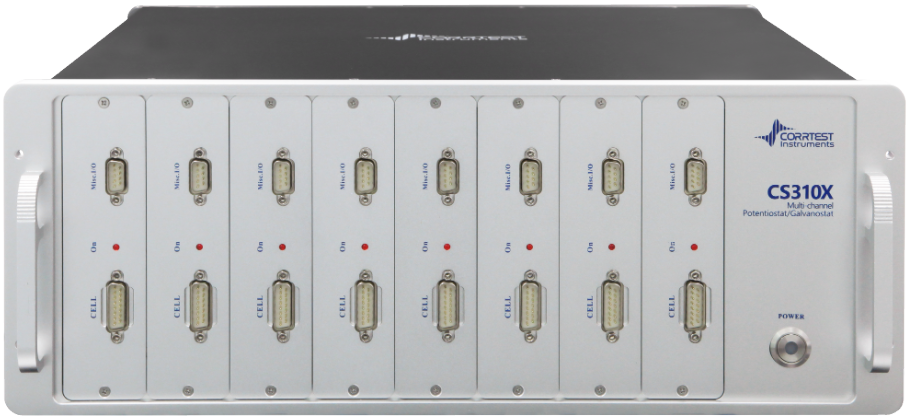
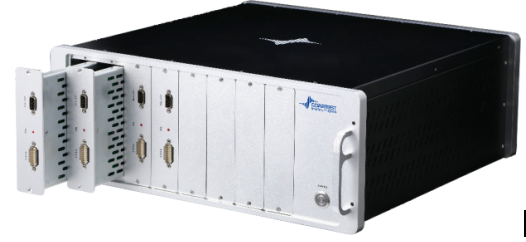
Corrtest Multichannel potentiostat/ galvanostat/EIS is a versatile instrument offering 8 slots.
Multichannel potentiostat/ galvanostat model CS310X (Option D) is the 8-channel potentiostat. And all the slots are occupied with potentiostat boards. It equals that you can have 8 sets independent potentiostat/galvanostat, and they're integrated in one chassis.
EIS module (10uHz~1MHz) is equipped in all the 8 channel. Each channel potential control range is ±10V, current control range ±1A, can meet experiment requirement for most people.
Full floating module and electrical isolation design guarantee each channel is totally independent, which ensures accurate data and efficient simultaneous measurements.
Multichannel potentiostat brings convenience to those who have many samples, and is an ideal device for studies of energy materials, battery study, metal corrosion etc.
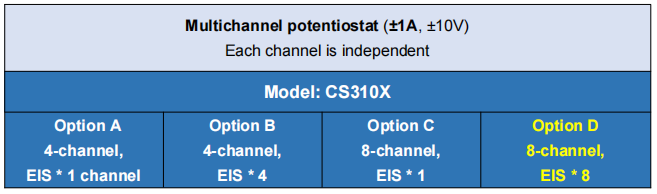
Option A: 4 independent channels,with EIS included on one channel only
Option B: 4 independent channels, with EIS included on all four channels
Option C: 8 independent channels, with EIS included on one channel only
Option D: 8 independent channels, with EIS included on all 8 channels
The number of channel and EIS module can be customized.
More channels can be added by potentiostat boards to be installed on current device.
EIS can be upgraded online.
Application
-Energy materials (Li-ion battery, solar cell, fuel cell, supercapacitors, electrocatalysis;
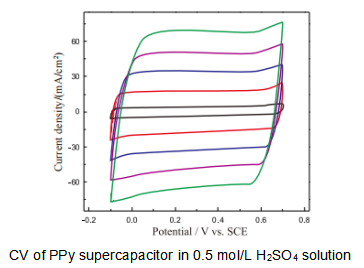
With versatile functions like linear sweep voltammetry (LSV), cyclic voltammetry (CV), galvanostatic charge/discharge (GCD), EIS (including potentiostatic and galvanostatic modes) with precise IR compensation, CS potentiostats are widely used in supercapacitor, Li-ion batteries, Li-S batteries, fuel cell, solar cell, solid-state batteries, flow batteries, and metal-air batteries, etc.
-Reactive mechanisms of electrosynthesis, electrodeposition (electroplating), anodic oxidation, electrolysis;
-Metallic corrosion; corrosion inhibitor, coating and cathodic protection efficiency;
CS potentiostats/galvanostats support a variety of electrochemical techniques for corrosion, such as OCP recorder, potentiodynamic, EIS, cyclic polarization (CPP), LPR, hydrogen diffusion test, zero resistance ammeter (ZRA), electrochemical noise (ECN), etc. Due to their high input impedance(1013Ω), they are especially suitable for EIS measurement of high-impedance systems like coating, concrete, and pure water.
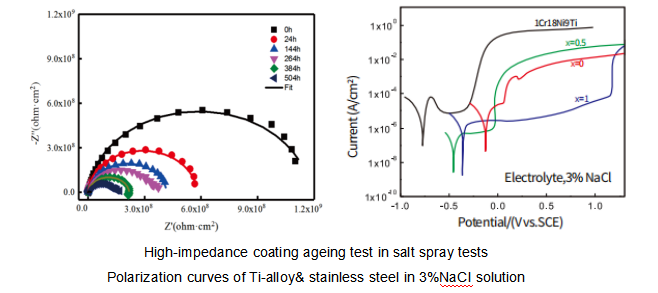
-Electrocatalysis (HER, OER, ORR, CO2RR, NRR).
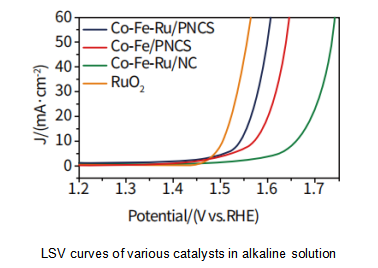
Based on CV and LSV techniques, CS potentiostats can carry out long-term tests for ORR, OER, HER, and CO2 reduction, which is crucial for evaluating catalyst stability. In addition, the multichannel potentiostat specialize in Faradaic efficiency synchronous measurement.
CS potentiostats can measure the half-wave potential (ORR) and overpotential (HER, OER) of catalysts and calculate the power density and energy density of Redox peaks.
Simultaneous Measurements
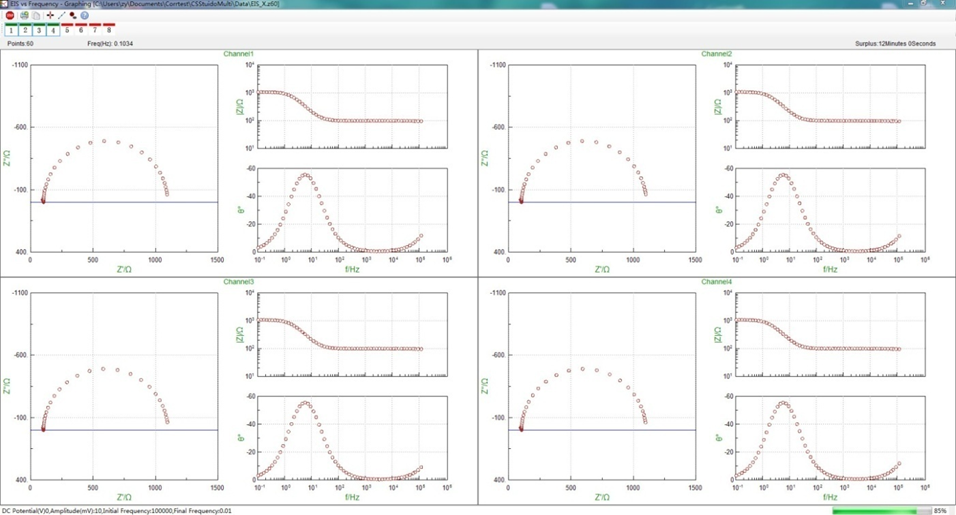
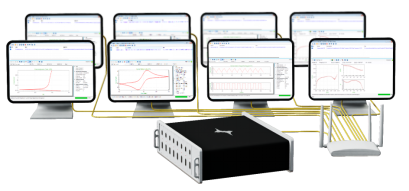
The customer can choose a same electrochemical technique in every channel. For example, among 8 channels, you can choose to run 4 channels to all do EIS measurement. Set the parameters just one time, then EIS measurement in each channel will be conducted at the same time.(Here is an example of using the 4 channels. You can run the 8 experiments at the same time on one window)
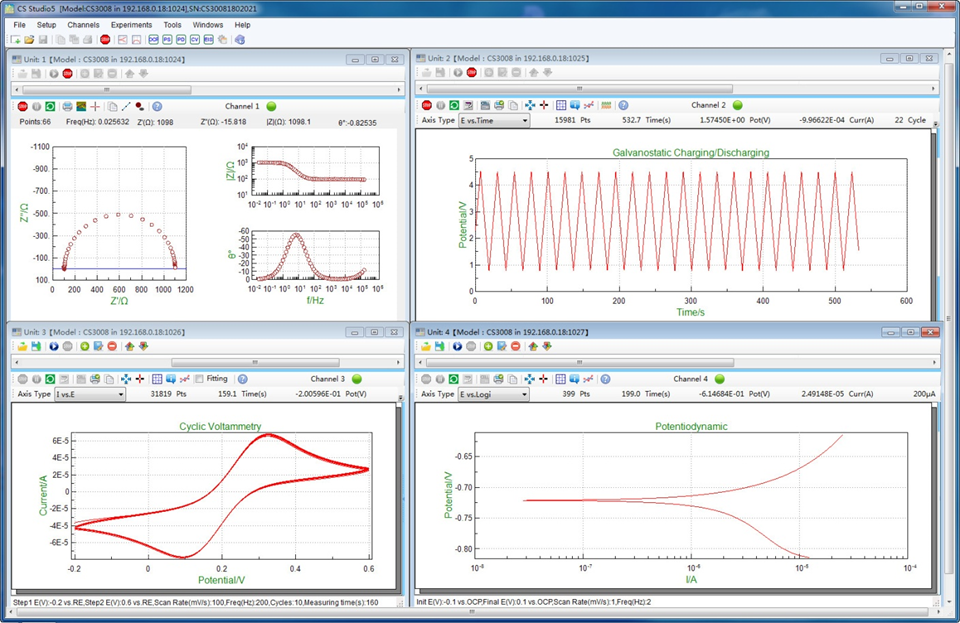
In each channel, you can also conduct different experiments. As is shown in the below picture, EIS, galvanostatic charge and discharge, CV, and polarization curve tests are conducted at the same time.(Here is an example of using the 4 channels. You can run the 8 experiments at the same time on one window)
Thanks to the expandable slot design, Customers can open the chassis and install more potentiostat board to increase the number of channels.
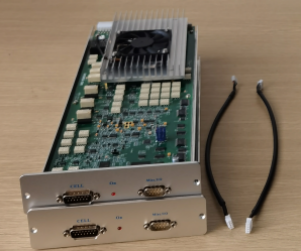
Standard potentiostat/galvanostat boards
In one chassis, there are 8 slots inside.
For 4-channel, four standard Pstat/Gstat boards are installed and there are 4 empty slots for future extension of channels.
For 8-channel potentiostat, eight standard Pstat/Gstat boards are installed in the 8 slots.
Technical Advantages
Switchable floating and earthing mode
All CS potentiostats/galvanostats can switch between the floating and earthing modes, and this strategy is beneficial for studying electrochemical systems in which the working electrodes are intrinsically ground, such as autoclaves, in-site concrete structures and multi-working electrodes requiring isolation, etc.
High-bandwidth EIS
with the help of built-in digital FRA and arbitrary signal generator, as well as the high input impedance (1013 W), the CS potentiostat is particularly suitable for EIS measurements of high-impedance systems (such as coating, membrane, concrete, etc.)
Based on the DC bias compensation technique, CS potentiostats can conduct EIS tests under different charge/discharge states of batteries, making them suitable for ultra-low resistance systems, such as power batteries, fuel cells, water-splitting equipment, etc.
Multiple electrode configurations
CS potentiostats support 2-, 3-, or 4-electrode configurations and can measure the galvanic current via built-in zero resistance ammeter circuits.
Independent multiple channels
For CS 310X multi-channel potentiostat, each channel is completely independent. It can be used for the electrochemistry measurements of multiple cells or multiple working electrodes in a cell.
User-defined sequence test
CS Studio 6.0 for Windows software supports user-defined sequence tests ("combination test"), which can facilitate automatic testing according to user-defined experiment sequences.
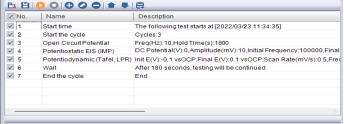
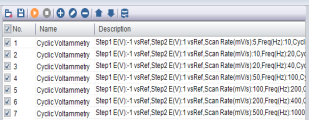
Sequence Test: corrosion tests Sequence Test: Pseudocapacitor tests
Power booster
Through CS2020B/CS2040B/CS2100B booster, the CS potentiostats can extend their output current up to ±20A/40A/100A, meeting the growing requirements in fuel cells, power batteries, electroplating.
Software development kit (SDK)
All CS potentiostats run under the control of CS Studio 6.0 for Windows (CSS 6.0). The CSS6.0 supports third-party languages, such as LabVIEW, C, C++, C#, VC, Python and others. Some API general interfaces and development examples can be supplied with the CS potentiostats. Through the SDK, customers can implement user-defined test methods.
Overcurrent overpotential protection
The software will give an "overload current" or "overload potential" warning if the current or potential is exceeding the maximum current/ potential output of the instrument. The test will stop automatically.
Real-time data saving
CSS 6.0 saves experimental data timely, even if the experiment is accidentally interrupted by a power failure or computer shutdown. CSS 6.0 supports several data formats compatible with Originpro and Microsoft Excel.
Multi-user capability
Channels of the CS310X can be allocated to multiple users on various computer.
Versatile data analysis functions
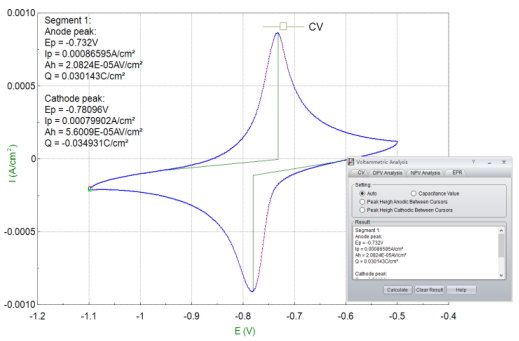
CSS 6.0 provides robust functions, including various electrochemical measurements and data analysis. It can complete Tafel plot fitting, CV derivation, integration and peak height analysis, EIS equivalent circuit fitting, etc.
- 3, 4 parameter polarisation curve fitting.
- EIS fitting
- Electrochemical noise spectrum analysis
- Pseudo-capacitance calculation
- GCD-specific capacitance, efficiency calculation
- Mott-Schottky analysis
- CV curve analysis
- Activation/re-passivation curve analysis